Alex is 30 and renting. Their job might take them to another city. Buying comes up in conversations with their partner, but neither knows where they would settle. They have some savings and wonder whether waiting for a clearer plan means missing an opportunity.
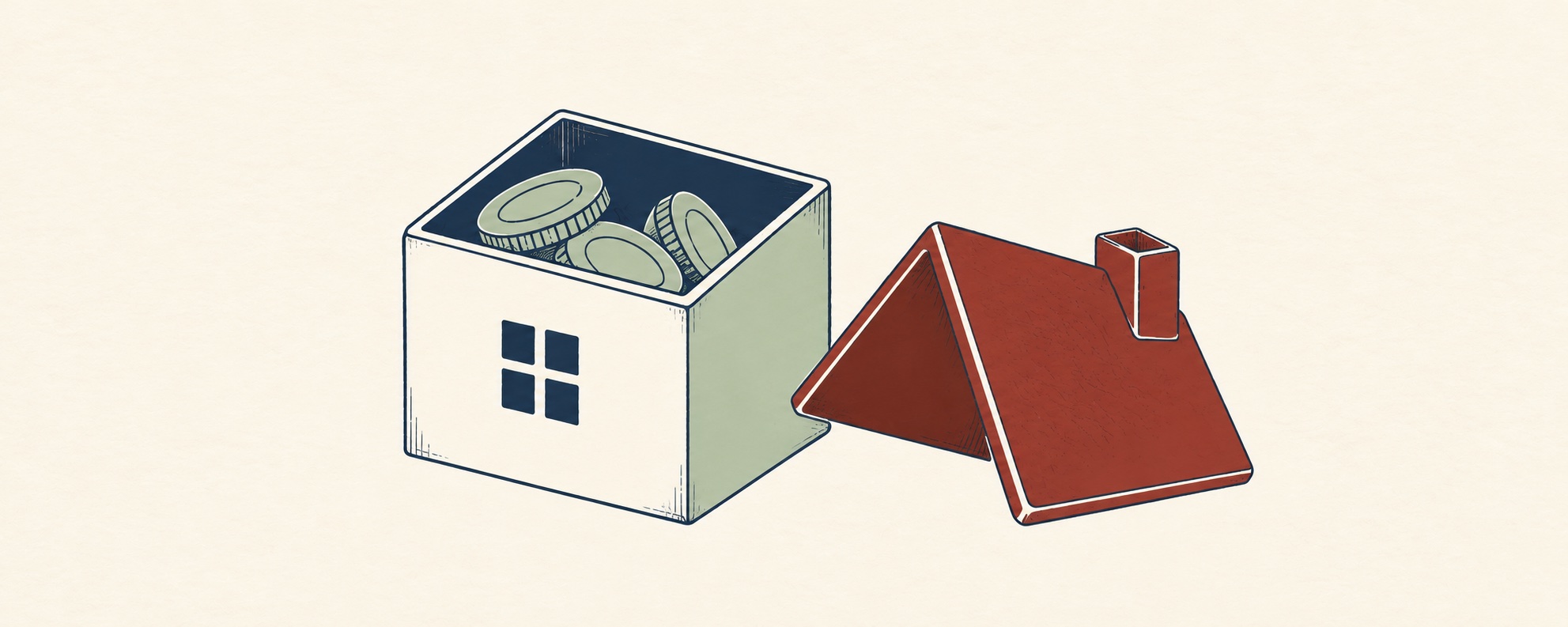
A first home savings account, or FHSA, is a registered account that can let eligible first-time buyers deduct contributions from their income and withdraw the money tax-free for a qualifying home purchase.
Opening one can sound like a decision about the rest of Alex’s life. It doesn’t have to be.
The useful distinction is between opening the account, putting money into it and claiming a tax deduction. Those decisions can happen at different times.
First, “First-Time Buyer” Has a Specific Meaning
Eligibility starts with Canadian residency, age requirements and a housing-history test. Generally, someone must be at least 18, or 19 where provincial contract rules require it, and no older than 71 at the end of the opening year.
For an account opened in 2026, the history check reaches back to January 1, 2022. It asks whether the person lived in a home they owned, or one owned by their current spouse or common-law partner, as their principal residence. Homes outside Canada count too. Renting today doesn’t automatically settle eligibility. CRA: opening an FHSA
Opening Creates Room. Contributing Uses It.
Alex is hypothetical and meets those conditions. Opening their first FHSA in 2026 gives them $8,000 of participation room that year. The usual framework is $8,000 annually and a $40,000 lifetime limit, shared across all their FHSAs. Room starts with opening the first account, rather than accumulating throughout adulthood. CRA: participation room
Suppose Alex opens their first FHSA in 2026 and leaves it empty. Here is how the available room develops:
| Year | Available room if Alex has contributed nothing so far |
|---|---|
| 2026, when they open the account | $8,000 |
| 2027 | $16,000 |
| 2028 | Still $16,000 |
In 2027, Alex has that year’s $8,000 plus $8,000 carried forward. But the carryforward is capped at $8,000. Leaving the account empty for another year does not produce $24,000 of room in 2028. These examples assume no transfers, withdrawals or excess contributions. CRA: carryforward calculations
Even if Alex opens the account and contributes nothing, they still need to report opening their first FHSA on Schedule 15 when filing their return. CRA: reporting activities
The Deduction Can Wait
In a separate example, suppose Alex contributes $4,000 in 2026. They can generally deduct that contribution for 2026 or save the deduction for a future year. Waiting to claim doesn’t undo the contribution or restore the room it used. CRA: deduction timing
At an assumed 30% marginal income-tax rate applying to the whole deduction, $4,000 would reduce income tax by approximately $1,200. That’s an illustration, not a promised refund. The actual result depends on income, province and the rest of the tax return.
Someone expecting higher taxable income later might consider deferring the deduction. But a future tax saving also arrives later. A higher future income is an expectation, and the value of having the saving sooner matters too.
One calendar detail is easy to miss: FHSA contributions run from January 1 to December 31. A contribution made in early 2027 cannot be deducted for 2026 under the RRSP’s first-60-days convention. CRA: contribution deadlines
Opening Also Starts a Clock
The account’s maximum participation period starts when the first FHSA opens, even if no money goes in. It ends on December 31 of the earliest applicable year: the year of the account’s 15th anniversary, the year the holder turns 71, or the year after their first qualifying withdrawal. CRA: closing an FHSA
For Alex, opening in 2026 normally means a December 31, 2041 deadline, unless another trigger comes first. That leaves a long window. It also means a possible purchase at 50 would fall outside it.
This is the trade-off in opening early: contribution room starts sooner, and so does the deadline. The account can accommodate uncertainty without making timing irrelevant.
What If Alex Never Buys?
There is a retirement route. Before the closing deadline, the FHSA balance can generally transfer directly to an RRSP or RRIF in Alex’s name without using RRSP deduction room or triggering immediate income tax. Excess FHSA amounts can limit how much qualifies.
The institutions must handle a direct transfer. Withdrawing the money into a bank account and then depositing it into an RRSP is a different transaction with different tax consequences. Later RRSP or RRIF withdrawals are generally taxable. CRA: transfers out
The direct transfer doesn’t generate another tax deduction. Income Tax Act, subsection 146.6(8)
If Alex never buys, the savings can still support retirement. But if they need the money for a move next summer, that fallback does not solve the problem. The balance is not freely spendable, tax-free money for a career break or move.
The Money Still Has to Fit Real Life
An ordinary non-qualifying withdrawal is included in income, with tax withheld toward the eventual bill. That matters if Alex needs the money for rent after losing a job. CRA: taxable withdrawals
The investments matter too. An FHSA can hold cash, GICs and various investments; the account’s name doesn’t guarantee accessible cash or a stable balance. Available holdings depend on the issuer. CRA: permitted investments
For money Alex may need before buying, a tax-free savings account (TFSA) is worth comparing if they have available contribution room. Ordinary TFSA withdrawals are tax-free, although the investments inside still need to suit when the money might be needed. Withdrawal amounts generally become available to contribute again in the following calendar year; putting them back sooner requires other available room. CRA: TFSA withdrawals
Emergency savings need to be easy to reach. Investment risk, withdrawal procedures and any product restrictions deserve attention before moving money that might be needed soon. FCAC: emergency savings
And the available room needs checking. Excess contributions generally face a monthly tax of 1% of the highest excess amount that month. CRA: excess contributions
If Buying Becomes the Plan
Qualifying withdrawals can include investment growth and don’t need to be repaid. But opening eligibility isn’t a guarantee that a future withdrawal qualifies. CRA: qualifying withdrawals
Before requesting a tax-free home-purchase withdrawal, Alex needs to check that they meet all the conditions, including:
- The home and agreement: a written agreement to buy or build a qualifying home in Canada, with acquisition or construction completion before October 1 of the year after the withdrawal.
- The timing: they cannot have acquired the home more than 30 days before the withdrawal.
- Their eligibility: they meet the withdrawal’s first-time-buyer test and are resident in Canada from their first qualifying withdrawal until acquiring the home, or until death if earlier.
- Their plans for the home: they occupy or intend to occupy it as their principal residence within one year of buying or building it.
- The paperwork: they give the issuer Form RC725 to request the qualifying withdrawal.
Check the full conditions with the issuer before withdrawing. CRA: qualifying-withdrawal form and conditions
One important difference: the withdrawal’s first-time-buyer test looks at the holder’s own ownership history. A spouse’s ownership is relevant to the opening test, but doesn’t automatically prevent a later qualifying withdrawal from an account properly opened earlier. CRA: first-time-buyer definitions
The Decision Can Be Smaller Than “Will I Ever Buy?”
Alex can consider opening an FHSA without having a home purchase planned. First, they need to check eligibility, decide whether starting the clock makes sense and consider whether retirement savings would be an acceptable outcome if buying never happens.
How much to contribute is a separate decision, based on what they can leave for a future home or retirement after keeping enough accessible for the life they are living now.
Methodology and Assumptions
This article covers the general Canadian FHSA rules. Alex is hypothetical. The contribution-room examples assume no transfers, withdrawals or excess contributions. The $4,000 deduction example assumes a 30% marginal income-tax rate applies to the whole deduction, giving an illustrative $1,200 reduction in income tax. It is not a guaranteed refund.
The 2041 deadline assumes Alex first opens an FHSA in 2026 and no earlier closing trigger applies. Individual tax and investment decisions depend on personal circumstances. Sources checked October 19, 2026.
Sources
- CRA: opening an FHSA
- CRA: participation room
- CRA: carryforward calculations
- CRA: reporting activities
- CRA: deduction timing
- CRA: contribution deadlines
- CRA: closing an FHSA
- CRA: transfers out
- Income Tax Act, subsection 146.6(8)
- CRA: taxable withdrawals
- CRA: permitted investments
- CRA: TFSA withdrawals
- FCAC: emergency savings
- CRA: excess contributions
- CRA: qualifying withdrawals
- CRA: qualifying-withdrawal form and conditions
- CRA: first-time-buyer definitions