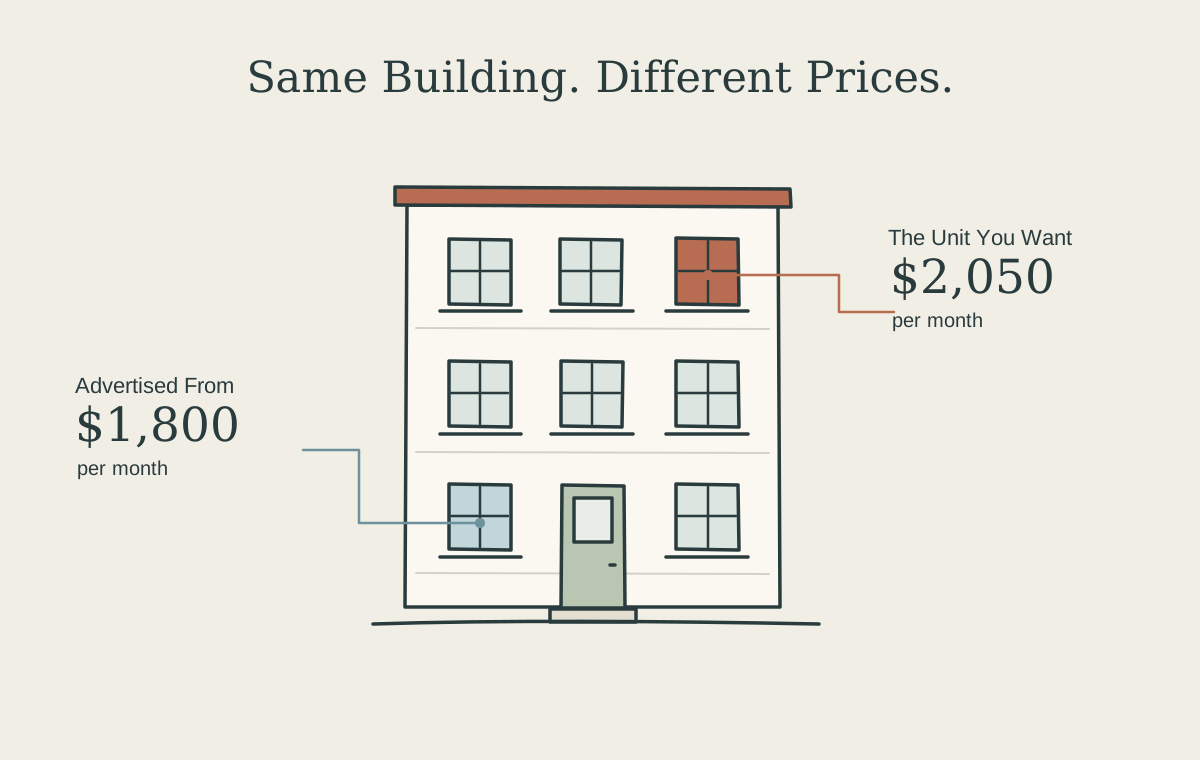
Imagine finding a one-bedroom advertised from $1,800 a month. It fits your budget. You look through the floor plan, picture your furniture and arrange a viewing.
The apartment you want is $2,050.
That is another $3,000 a year for an address you thought you could afford. These are illustrative numbers, but they describe a distinction worth catching before you book the tour: a starting price and a quote for a particular apartment are different offers.
It also helps explain how a rental search can feel stubbornly expensive even when the market is moving down.
Two words doing a lot of work
“Starting at” tells you where an advertised price range begins. It does not promise that every apartment in that category costs the same amount, or that the starting-price unit fits your move-in date.
There is a practical example in Calgary. The Icon at Mission listing on RentFaster, attributed to City Vibe Developments, says its rates are starting prices and can vary with suite type, floor level and availability. It also says the photographs may not show the exact available suite.
The distinction matters when a building is selling you on a layout. A floor plan can tell you where the bedroom goes. It cannot, by itself, tell you the outlook from a particular window or which outdoor space comes with the unit.
Concert's Jazz rental page in Toronto also cautions that actual suites can differ in size, finishes, layouts and balconies. The useful next step is to match the picture and floor plan to a unit number, then match that unit number to a written price.
A higher floor may be part of the explanation. It is not a universal pricing rule. Ask what distinguishes the two apartments rather than assuming every extra dollar buys elevation, or that a ground-floor apartment must be the cheapest.
A falling market can still leave you over budget
There is evidence behind the falling-rent headlines. Statistics Canada reported that average asking rent for a two-bedroom apartment across its combined metropolitan areas was $2,130 in the second quarter of 2026, down 3.6% from a year earlier. In the Calgary metropolitan area, the decline was 6.4%. These are advertised rents, not quotes for one particular building. Statistics Canada, released September 9, 2026.
Now return to the hypothetical $2,050 apartment. Suppose that exact unit had been offered at $2,200 a year earlier. Its asking rent would have fallen by $150 a month. It would still cost $250 more than today's $1,800 starting price.
Both things can be true. The first comparison follows a unit over time. The second compares different offers today.
That is why the gap between an ad and a viewing quote cannot, on its own, tell us whether rents have fallen. It tells us the apartment being considered costs more than the advertised entry point.
Nor does a market average track an identical apartment year after year. Statistics Canada notes that changes in the characteristics of listed units can affect its averages. A market report provides context; your shortlist needs unit-specific comparisons.
A free month is another number to untangle
An incentive adds a separate question: is the advertised amount the rent charged in an ordinary month, or an average after a discount?
For a hypothetical 12-month lease at $1,800 a month with one full month of rent waived, the total rent would be $19,800. Spread across the year, that is $1,650 a month. The rent in each of the other 11 months would still be $1,800.
That discount has value. The payment schedule still matters. Ask for both the total rent over the lease term and the amounts due each month, with the incentive conditions in writing. Compare any parking, storage or other additional charges separately.
This is a different issue from choosing a more expensive unit in the same building. Combining the two can make apparently similar offers difficult to compare.
Get the unit number before the tour
You can make the next enquiry more useful with one message:
Before I book, could you confirm which unit is available at the advertised starting price for my move-in date? Please send its unit number, floor plan, monthly rent before incentives, incentive terms, and all mandatory additional charges. If the unit we would view has a different price, please send that breakdown too.
Then decide whether the difference is worth paying. A different outlook or outdoor space may matter to you. So may keeping another $250 a month for everything outside the apartment.
The question to settle before the viewing is specific: which apartment can I actually rent at that price?